 Skarp
Ancient Civilisations: Cities, Power, and Connections
A concise listening journey through the systems that shaped ancient civilisations. Across three episodes, listeners will compare early cities, decode the purposes of writing and law, and discover how trade connected societies across vast distances.
The first lecture plays free — no account needed.
What you'll learn
- Students will be able to identify how food production, specialised work, infrastructure, and coordinated authority contributed to the growth of early cities.
- Students will be able to compare how ancient societies used writing to preserve information, organise institutions, and reinforce authority.
- Students will be able to use archaeological sites and artefacts to infer how trade connected ancient societies while distinguishing evidence from speculation.
Prerequisites
- urbanisation
- division of labour
- coordinated authority
- writing and record-keeping
- political authority
Course Content
3 modules · 16 min total
When Settlements Became Cities
Students will be able to identify how food production, specialised work, infrastructure, and coordinated authority contributed to the growth of early cities.
Writing, Law, and the Machinery of Power
Students will be able to compare how ancient societies used writing to preserve information, organise institutions, and reinforce authority.
The Ancient World Was Already Connected
Students will be able to use archaeological sites and artefacts to infer how trade connected ancient societies while distinguishing evidence from speculation.
Read the Textbook
Read every chapter for free, right here in your browser.
A settlement becomes a city when people live together at a scale that requires systems beyond the household. Urbanisation is not simply population growth. It is the concentration of people, activities, and decision-making in a shared place.
A village may contain farmers, homes, storage areas, and paths. An early city adds coordinated streets, public buildings, specialised workplaces, rules for shared resources, and leaders or institutions able to organise work. The change is gradual rather than a single moment.
A useful test is to ask: Could this community function if every household did everything for itself? If the answer is no, the settlement is developing urban characteristics.
More in History
See all →
The Origin Story of the English Alphabet
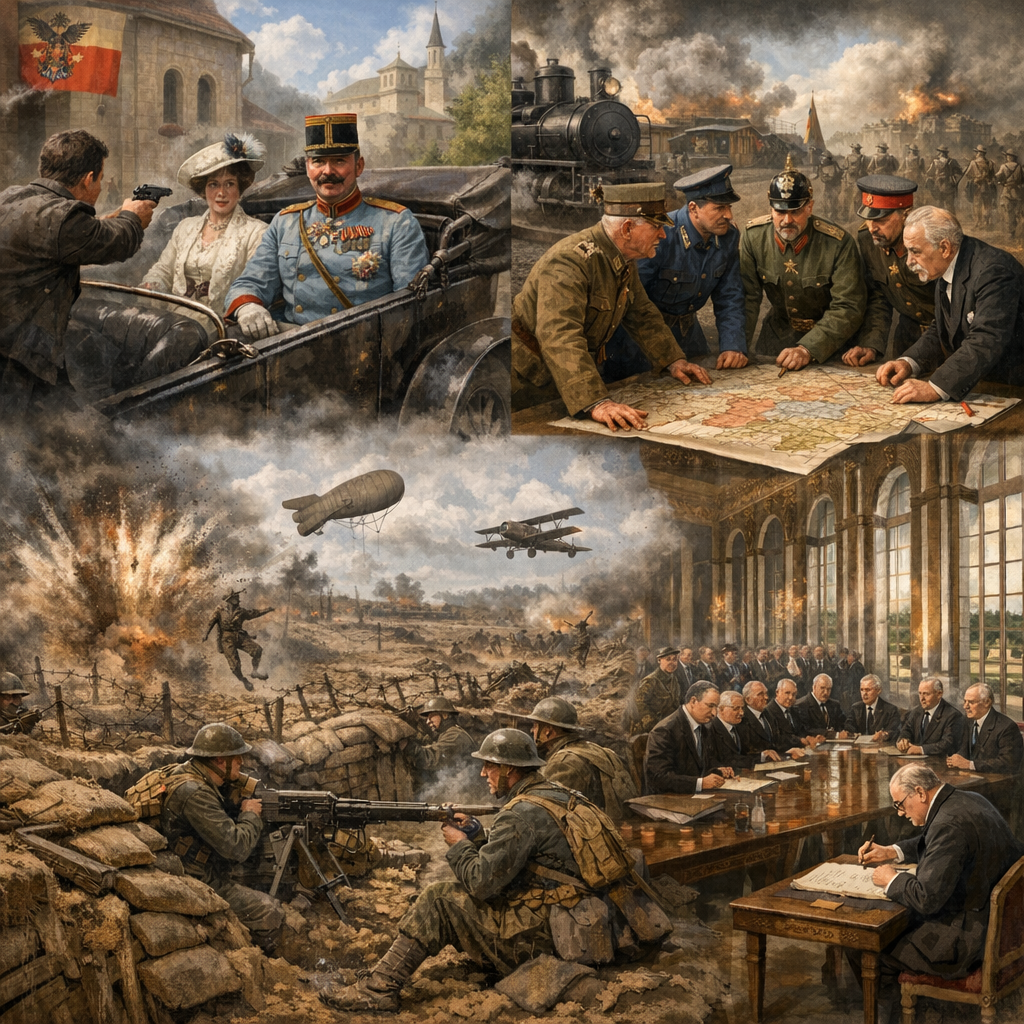
Första världskriget för åk 8: Från skottet i Sarajevo till Versaillesfreden

Yhdysvaltain sisällissota: syyt, kulku ja seuraukset