 Skarp
Skarp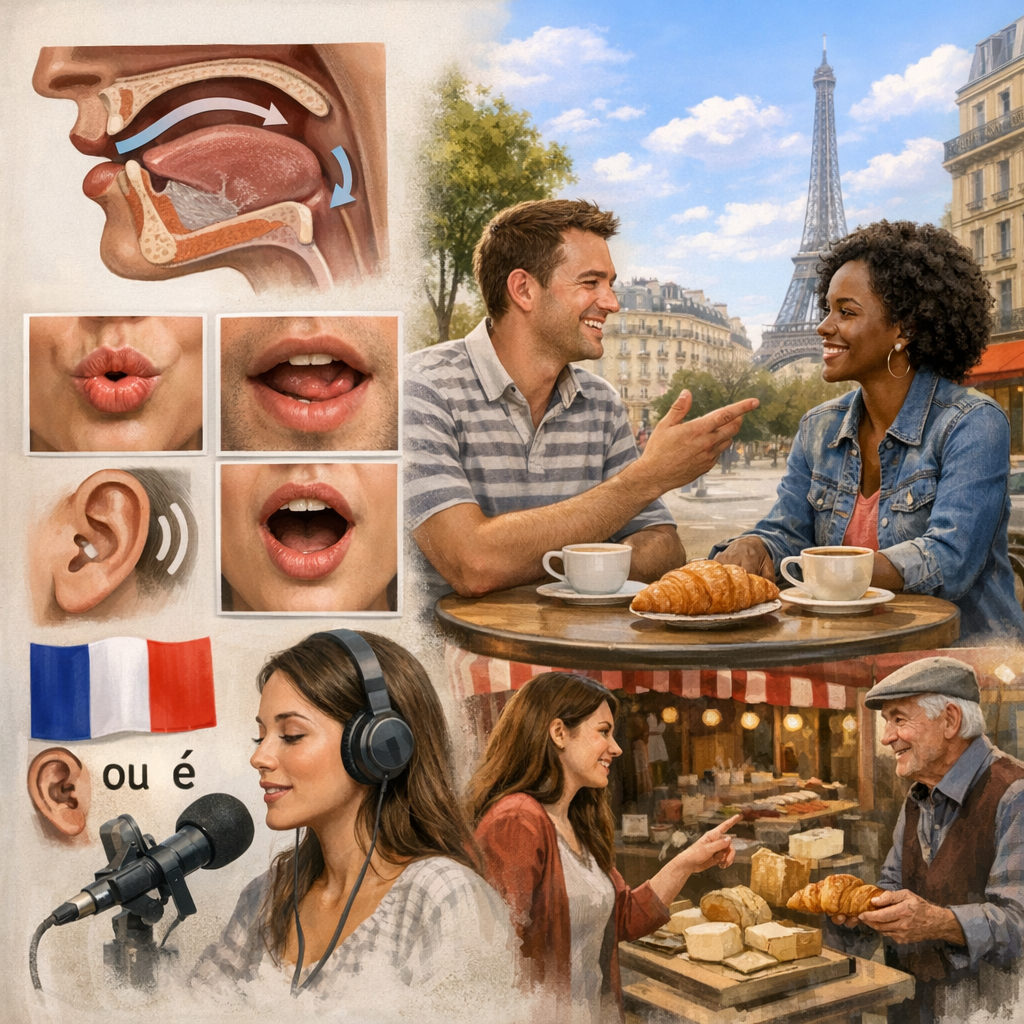
French Pronunciation and Conversation for Beginners
Learn how to pronounce French sounds clearly and build your first real conversations in French. This beginner-friendly course focuses on practical pronunciation, everyday phrases, and confidence in speaking and understanding simple French.
The first lecture plays free — no account needed.
What you'll learn
- Students will be able to recognize the French alphabet and understand that many letters have different sounds than in English.
- Students will understand the main differences between French and English pronunciation (e.g., clearer vowels, less stress on syllables).
- Students will be able to use simple listening and repetition strategies to imitate French sounds.
- Students will be able to pronounce the main French oral vowels with reasonable accuracy.
- Students will understand what nasal vowels are and produce basic examples such as 'an', 'on', and 'in'.
- Students will be able to distinguish between similar vowel sounds in simple word pairs by listening.
- Students will be able to approximate the French R sound and differentiate it from English R.
- Students will understand how to pronounce the French U sound and distinguish it from 'ou'.
- Students will be able to identify common cases where final consonants are silent in everyday words.
- Students will understand that French rhythm is more even and syllable-based than English.
Prerequisites
- French alphabet and basic sound awareness from Module 1
- Basic awareness of French vowels and sound system from Modules 1–2
- Core French vowel and consonant pronunciation from Modules 2–3
- Basic pronunciation skills from Modules 1–4
- Greetings and polite expressions from Module 5
- Familiarity with French rhythm and intonation from Module 4
Course Content
10 modules · 2h 30m total
Getting Started: French Sounds and How They Differ from English
An introduction to the French sound system and how it differs from English, so you can start hearing and producing French more accurately.
Mastering Core French Vowels and Nasal Vowels
Focus on the most important French vowels and nasal vowels, with clear examples and practice words to build accurate pronunciation.
Tricky Consonants: R, L, U, and Silent Letters
Learn to pronounce the most challenging French consonants for English speakers and understand when final letters are silent.
French Rhythm, Stress, and Linking (Liaison)
Discover how French rhythm and stress work, and practice linking words together to sound more natural and fluent.
Essential Greetings and Polite Expressions
Learn to greet people, say goodbye, and use polite expressions in everyday French, with a focus on natural pronunciation and intonation.
Introducing Yourself and Asking Simple Questions
Practice introducing yourself, giving basic personal information, and asking simple questions in French.
Talking About Your Likes, Dislikes, and Daily Life
Build vocabulary and phrases to talk about what you like, dislike, and do every day, while reinforcing clear pronunciation.
Listening Skills: Understanding Slow, Clear French
Develop strategies to understand slow, clear French in everyday situations and train your ear for key sounds and phrases.
Building Short Real-Life Dialogues
Put everything together by practicing short, realistic dialogues for common situations such as cafés, shops, and meeting new people.
Review and Personal Practice Plan
Review key pronunciation points and conversation patterns, and create a simple personal practice plan to continue improving your French speaking.
Read the Textbook
Read every chapter for free, right here in your browser.
In this step you will meet a few very common French words and phrases that show important sound differences from English. Pay attention to the vowels, the final consonants (often silent), and the smoother rhythm of French. Clear, steady vowels
French vowels are usually short, pure, and steady, without the little glide that English often adds.
Compare: French: "oui" – oui (wee): one clear sound. English: "we" often sounds like "wii" with a tiny glide.
More in Languages
See all →
Survival Travel Phrases in Spanish, French, and Mandarin

Conversational Swahili for Everyday Situations

Everyday Conversational Arabic: Practical Phrases for Real Life
Exploring Toki Pona: A Minimalist Language in Practice

Everyday Mandarin: Practical Conversational Chinese